Do You Actually Need a Cold Plunge Tub?
You've mastered the beginner basics and established your protocols. Now you're tired of buying 20 bags of ice weekly. A dedicated tub changes everything for consistency and convenience. But with options from $100 stock tanks to $7,000 smart chillers, which delivers the best value?
This guide cuts through the marketing hype with real-world testing, owner reviews, and 3-year total cost analysis. As a physical therapist with 12 years treating athletes, I've guided hundreds of patients through this purchase decision. The most common regret I hear is buying a massive chiller system for a habit that wasn't sustainable. Let's make sure you invest wisely.
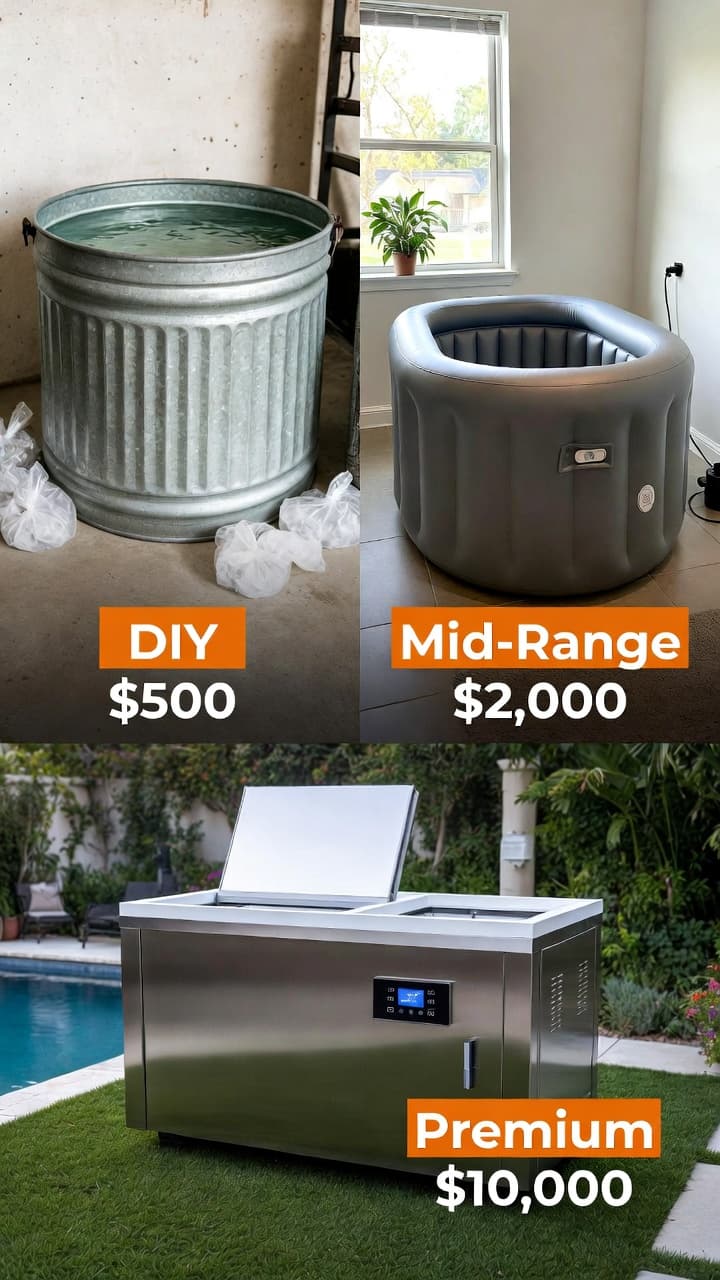
Tier 1: DIY Setup (Budget 00-500)
The original cold plunge method. Simple, effective, and remarkably durable.
Stock Tank Setup: The OG Choice
Components:
- 100-gallon Rubbermaid or Behlen stock tank: $100-150
- Digital pool thermometer: $15
- Large ice block molds: $30
- Submersible pump for draining: $40
- Total: $$185-235
Pros: Virtually indestructible, easy to clean, drains in minutes, fits most body types. I've seen stock tanks survive 20 years outside in the snow—something expensive plastics can't claim.
Cons: Manual ice management, no filtration (water changes every 3-5 days), unattractive for indoor use, gets hot in summer if you don't manage ice.
Best For: Budget-conscious beginners testing commitment; garage/outdoor setups; those in cool climates where ice lasts longer.
Chest Freezer Conversion
Components:
- Used chest freezer (7-15 cu ft): $50-100
- Temperature controller (InkBird): $35
- Waterproof sealant: $20
- Total: $$105-155
Pros: Maintains temperature without ice; very cold (38°F easily); low electricity cost.
Cons: Safety concerns (electrical + water); potential for Freon leaks; not designed for water immersion; voids warranty; requires GFCI outlet.
Tier 2: Portable & Inflatable ($400-1,500)
Designed for renters, travelers, or those wanting better aesthetics than a stock tank.
Best Inflatable Options
The Pod (The Pod Company):
- Price: $400-500
- Capacity: 85 gallons
- Insulation: 3-layer PVC with thermal lining
- Pros: Packs flat, sets up in 5 minutes, includes insulated cover
- Cons: Can puncture (though rare with 2026 materials), requires manual ice, water changes every 3 days
Ice Barrel (Rigid Portable):
- Price: $1,200-1,500
- Capacity: 55 gallons (upright design)
- Material: UV-resistant plastic
- Pros: Space-saving vertical design, better insulation than inflatables, no assembly
- Cons: Smaller capacity (taller users may need to bend knees)
Rigid Portable Tubs
These are essentially stock tanks with better aesthetics and insulation, often including a seat and steps.
Renu Therapy Cold Stoic: $1,500-2,000
Good insulation, but still requires manual ice. Best value in portable rigid tubs.
Tier 3: Premium Chillers (
,500-7,000)The "set it and forget it" category. These systems maintain temperature automatically with advanced filtration systems.
What to Look For: HP, Filtration, Insulation
Cooling Power:
- 1/3 HP: Sufficient for 100-gallon tubs in mild climates
- 1/2 HP: Better for hot climates (Arizona, Texas) or frequent use
- 3/4 HP: Overkill for most home users—just burns electricity without cooling faster.
Filtration:
- Ozone generator: Best sanitation, minimal chemical use. You change the water once a month, not once a week.
- UV sterilizer: Good backup, but less effective alone.
- Cartridge filter: Requires monthly replacement (~$20/year).
Insulation: Look for R-10 or higher. Poor insulation = chiller runs constantly = higher electricity bills.
Top Premium Models Compared
| Model | Price | HP | Filtration | Insulation | Warranty | Best Feature |
|---|---|---|---|---|---|---|
| Plunge (Standard) | $4,990 | 1/3 | Ozone + Filter | R-10 | 1 year | Sleek design, Wi-Fi app |
| Renu Therapy Cold Stoic 2.0 | $5,400 | 1/2 | Ozone + UV | R-12 | 5 years | Best warranty, commercial-grade |
| Coldture Tub | $3,980 | 1/2 | Ozone | R-8 | 2 years | Best value, portable chiller |
| Odin Ice Bath | $6,900 | 1/2 | Ozone + UV | R-15 | 3 years | Best insulation (Australia) |


