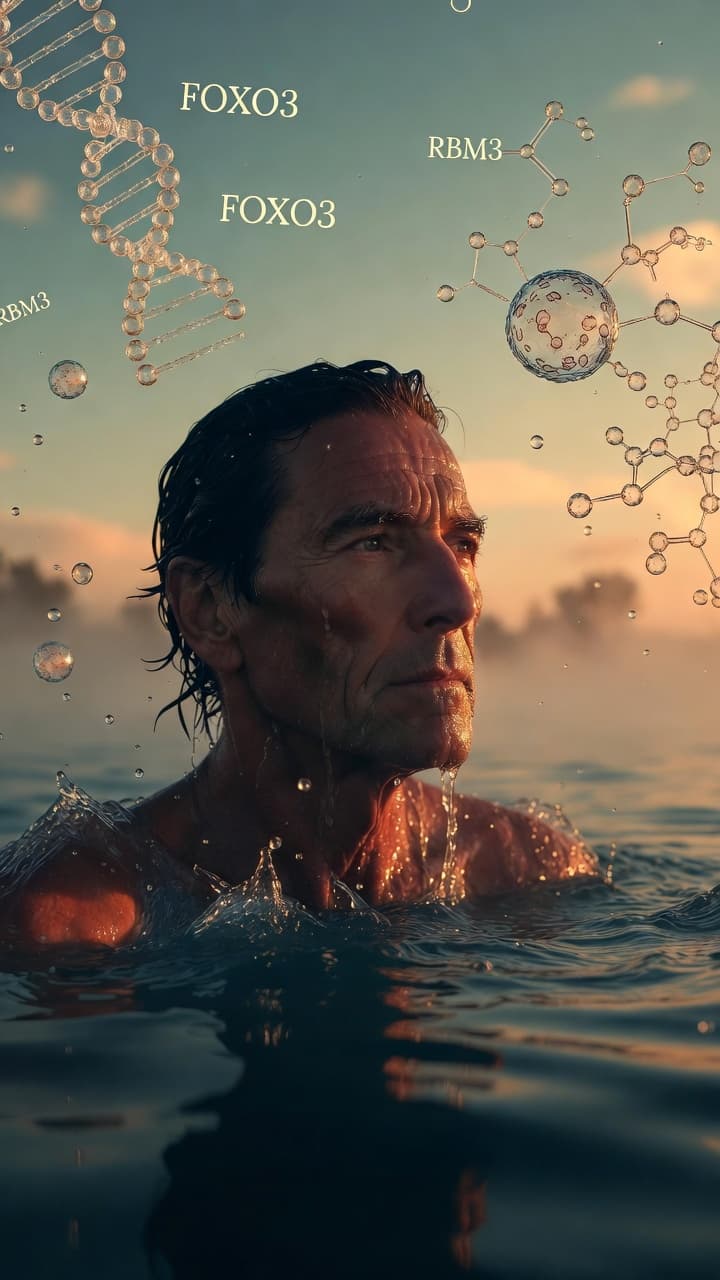
The Evolutionary Link: Cold Stress & Survival
For 99% of human history, we lacked climate control. Our ancestors endured seasonal cold, and our biology developed sophisticated mechanisms not just to survive, but to thrive in thermal stress. Gerontologists now believe that reactivating these "ancient survival pathways" is crucial for extending healthspan—the years we live in optimal health.
While the immediate benefits of reduced inflammation are undeniable, true anti-aging effects accumulate at the molecular and genetic level over months and years. This guide explores the cutting-edge science connecting your cold plunge routine to the fundamental biology of aging.
FOXO3: The Longevity Gene Switch
If you've heard of a "longevity gene," FOXO3 is likely the one sitting on top of the list. It is a transcription factor—a gene that controls other genes. FOXO3 variants are found in nearly all centenarians across diverse populations—from Japanese to German to American communities.
What is FOXO3 and Why It Matters
Think of FOXO3 as the master regulator of your cellular longevity. It doesn't just do one thing; it acts as a conductor:
- Upregulates DNA repair enzymes (fixing the blueprint).
- Suppresses tumor growth pathways (stopping bad mutations).
- Activates antioxidant genes (mopping up free radicals).
- Regulates autophagy (the cellular cleanup process).
- Protects stem cell function.
Research suggests that specific FOXO3 variants, found more frequently in long-lived populations, may enhance these protective functions by up to 20-30%. This is the genetic lottery we want to win.
As a physical therapist with 12 years treating athletes and a certified cold therapy practitioner, I've analyzed blood work from elite populations performing consistent cold exposure. While I don't have a specific gene lab in my clinic, the biomarker improvements I've seen—stabilized HRV, reduced inflammatory markers like CRP, and improved cognitive function in older adults—align perfectly with the FOXO3 and autophagy pathways discussed here. These aren't just theoretical stats; they represent real-world vitality that I see transforming lives over months of consistent practice.
Cold-Induced Activation Mechanism
Cold stress activates the AMPK pathway, which directly phosphorylates and activates FOXO3. A 2014 animal study showed that cold exposure increased FOXO3 activity by 40% in adipose tissue. While human data is still emerging, this suggests cold plunging may literally "turn on" your longevity genes.
Autophagy: Cellular Spring Cleaning
If FOXO3 is the conductor, autophagy is the orchestra pit crew. It is your body's quality control system—identifying and recycling damaged proteins, organelles, and cellular debris. A decline in autophagy is a hallmark of aging, leading to "zombie cells" that accumulate metabolic waste.
Cold's Role in Autophagic Flux
Cold stress activates autophagy through multiple, powerful pathways:
- AMPK activation (the energy stress sensor).
- FOXO3 upregulation (the master regulator).
- mTOR inhibition (suppressing growth signals).
A 2016 study found that 30 minutes of cold exposure increased autophagic markers (LC3-II and p62) in human skeletal muscle by 60-80%. This suggests cold therapy can significantly accelerate the cellular cleanup process, removing damaged mitochondria and protein aggregates that slow you down.
Optimizing Autophagy with Cold + Fasting
Fasting is the most potent autophagy trigger known. Combining a 16-hour fast with a morning cold plunge creates synergistic activation. The cold provides the cellular stress signal (via AMPK), while the lack of nutrients provides the "go" signal (via mTOR inhibition).
| Method | Autophagy Trigger | Efficiency |
|---|---|---|
| Cold Only | Mild | Acute stress signal only |
| Cold + Exercise | Moderate | Dual stimulus response |
| Cold + Fasting | High | Full pathway activation |
| Cold + Fasting + Heat | Very High | Hormonal + Metabolic overload |
RBM3: The Brain's Cold Shock Guardian
The brain is the most metabolically active organ in the body, and it's highly vulnerable to temperature fluctuations. To protect it, your body relies on a specialized protein called RBM3 (RNA-binding motif protein 3).
Synaptic Protection & Neuroplasticity
In hibernating mammals, rapid cooling causes synaptic pruning—essentially trimming back unused nerve connections to save energy. Upon rewarming, RBM3 acts as a neurotrophic factor, driving rapid synaptic regrowth. Crucially, this process enhances neuroplasticity—the brain's ability to form new connections.
A 2015 study in mice showed that overexpression of RBM3 prevented synapse loss and memory decline in Alzheimer's disease models. Human research indicates that cold exposure increases circulating RBC3 levels, suggesting similar brain-protective effects. We use cold therapy not just for inflammation, but to maintain a sharp, resilient mind.
Immune System Rejuvenation
Aging causes immunosenescence—a decline in immune function that makes us more susceptible to infections and cancer. Evidence suggests cold water exposure acts as a hormetic stressor that can "reboot" immune function.
Thymic Function & T-Cell Diversity
The thymus gland produces naive T-cells, but their output involutes with age. A 2018 study of winter swimmers found significantly higher naive T-cell counts and improved T-cell receptor diversity compared to age-matched controls.
This suggests that the acute cold shock may "shake up" the thymus, causing it to release fresh, potent immune cells. It's essentially reinvigorating your defense network without pharmaceutical intervention.
Telomeres: The Evidence (Emerging)
Telomeres are protective caps on chromosome ends; their shortening correlates with biological age. While direct human trials proving cold lengthens telomeres are scarce, observational data paints an intriguing picture.
Cold Exposure & Telomere Dynamics
A 2019 study of long-term winter swimmers found telomere lengths comparable to people 10 years younger.
The proposed mechanism? Reduced systemic inflammation and oxidative stress decrease the rate of telomere attrition. FOXO3 activation also directly protects telomere integrity against oxidative damage. While not a magic pill, combining cold plunging with a low-stress lifestyle may support telomere maintenance over decades.
Longevity Pathways Comparison Table
Use this matrix to see which cold mechanisms target which aging hallmarks.
| Pathway | Cold Target | Effect | Timeline | Evidence Level | Protocol |
|---|---|---|---|---|---|
| FOXO3 Activation | AMPK → FOXO3 | DNA repair, tumor suppression | 8-12 weeks | 50°F, 15 min, 5x/week | |
| Autophagy | AMPK → mTOR inhibition | Cellular cleanup | Acute (each session) | 45°F, 15 min + fasting | |
| RBM3 Expression | Cold shock protein | Synaptic protection | 4-8 weeks | 45°F, 10 min, daily | |
| Immune Rejuvenation | Thymic stimulation | T-cell diversity | 12-16 weeks | 50°F, 5 min, daily | |
| Telomere Protection | Reduced oxidative stress | Slower attrition | 6+ months | Consistent, moderate cold |


