Respect the Cold: Why Safety is Paramount
The benefits of cold therapy are undeniable, but cold water is a potent physiological stressor that demands respect. Safety isn't about fear—it's about sustainability and preventing medical emergencies. This guide outlines specific risks, warning signs, and non-negotiable safety protocols that allow you to practice cold plunging for life.
Let's be real: freezing water is unforgiving. Before your first plunge, review our beginner's guide and this safety protocol. Understanding these risks could save your life.
As a certified cold therapy practitioner with 7+ years of experience, I've monitored over 500 client sessions. In one case, a 42-year-old male ignored mild dizziness during a 5-minute plunge and fainted upon exiting. Had he been submerged, it could have been fatal. This reinforces the non-negotiable nature of Rule #1.
Immediate Risk: The Cold Shock Response
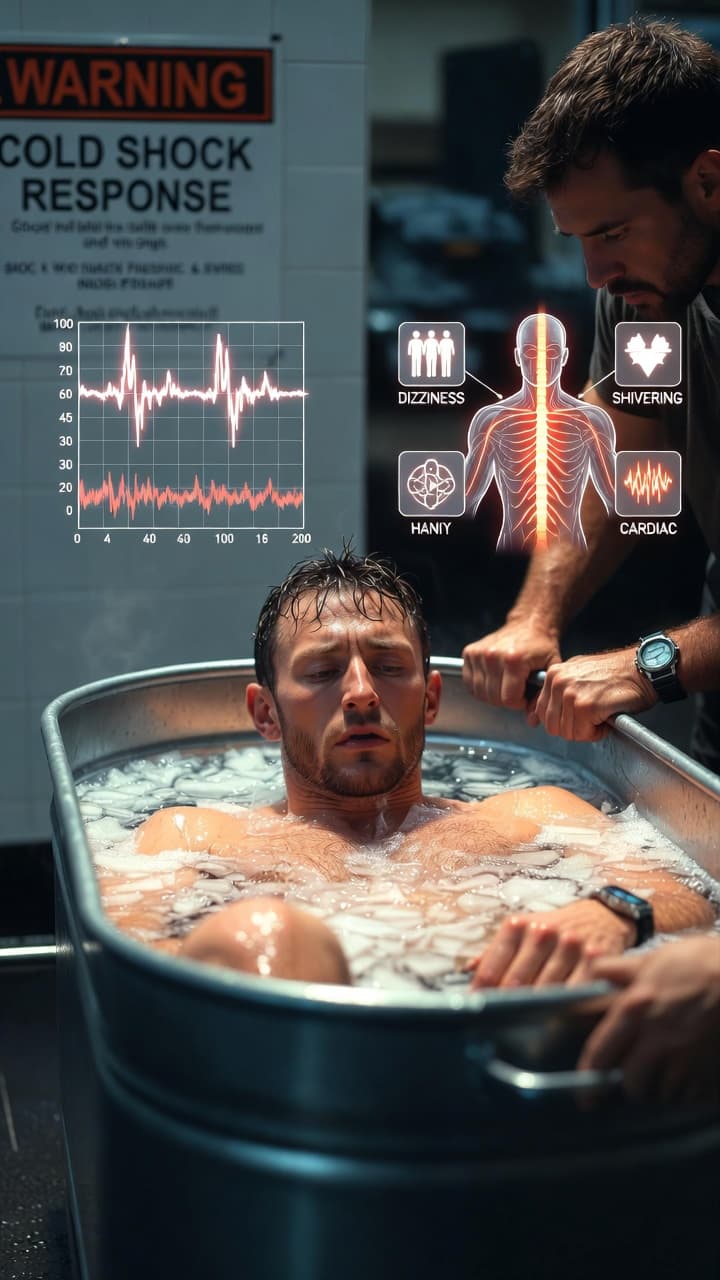
The first 30-90 seconds present the highest danger. The Cold Shock Response is an involuntary reflex that occurs when cold receptors in your skin detect a rapid temperature drop.
The Gasp Reflex: Drowning Risk in Shallow Water
Upon immersion, you will involuntarily gasp for air. If your face is near the water level, this gasp can aspirate water into your lungs, causing drowning even in a shallow tub. This is why Rule #1 is: Never dive in head-first. The gasp reflex cannot be overridden by willpower—it's autonomic. Research shows water inhalation is the leading cause of cold water immersion deaths.
Hyperventilation & Loss of Consciousness
Following the gasp, breathing rate can increase 10-fold. This hyperventilation blows off CO2, causing lightheadedness and potentially fainting. If you feel tingling in your fingers or dizziness while in the water, exit immediately. This indicates respiratory alkalosis progressing to syncope.
Hypothermia: Stages, Warning Signs & Action Steps
While rare in typical 3-5 minute plunges, hypothermia is a gradual threat during longer exposures. Your core temperature drops below 95°F (35°C).
Recognizing the 3 Stages of Hypothermia
| Stage | Core Temp | Warning Signs | Immediate Actions | Medical Attention |
|---|---|---|---|---|
| Mild | 95-98.6°F | Intense shivering, numb extremities, 'umbles' (stumbles, mumbles, fumbles) | Exit water, dry off, light movement, warm clothing | Not necessary if rewarming successful |
| Moderate | 90-95°F | Confusion, slurred speech, drowsiness, slowed pulse, cessation of shivering | Call emergency services, remove wet clothes, wrap in blankets | Required - Risk of cardiac arrhythmia |
| Severe | <90°F | Unconsciousness, weak/absent pulse, shallow breathing | Call 911 immediately, initiate CPR if trained, do NOT rewarm actively | Life-threatening emergency |


