All ArticlesAdvanced, Longevity & Biohacking

Contrast Therapy: The Ultimate Hot/Cold Protocol for Recovery & Performance

Master contrast therapy with science-backed sauna (+) ice bath protocols. Learn the hemodynamic pump effect, hormonal benefits (GH, IGF-1, BDNF), and safety precautions.

3/12/2026 13 min read
Contrast Therapy: The Ultimate Hot/Cold Protocol for Recovery & Performance
⚠️ Medical Notice: Contrast therapy involves rapid thermal changes and significant cardiovascular stress. Consult your physician before starting if you have cardiovascular conditions, Raynaud's disease, hypertension, or are pregnant. American Heart Association safety guidelines on exertion.

What is Contrast Therapy?

Contrast therapy—alternating between hot and cold environments—isn't new. Roman bathhouses used frigidarium (cold) and caldarium (hot) pools 2,000 years ago. Nordic cultures have practiced sauna + ice swimming for centuries. But what is new is the molecular understanding of why this combination produces effects greater than either modality alone.

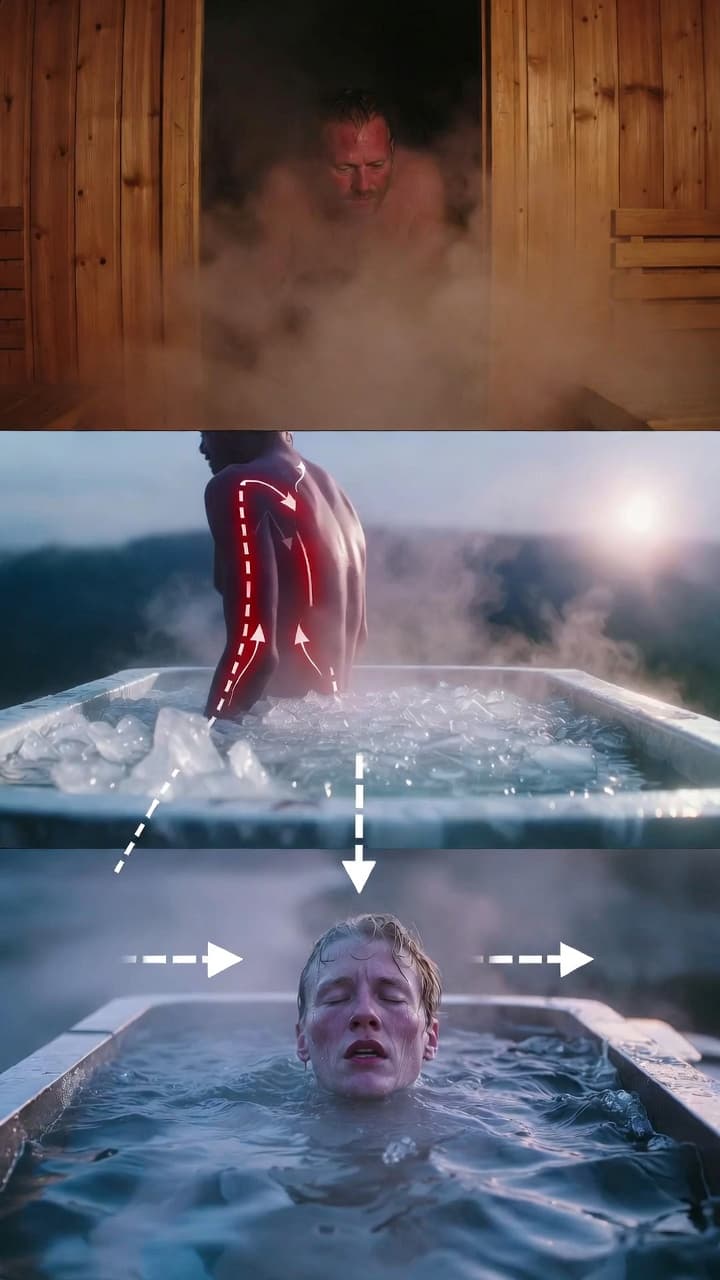
This is where engineering meets biology. By cycling between vasodilation and vasoconstriction, you're essentially creating a pump for your circulatory system. Let's break down the science.

The Hemodynamic Pump: Physiological Mechanism

The primary benefit of contrast therapy is hemodynamic—it creates a powerful pumping action for your blood and lymphatic system. Think of it as nature's vascular workout for your circulatory system.

Vasodilation vs. Vasoconstriction

When you enter a sauna at 180°F, your blood vessels dilate (vasodilation), increasing blood flow to skin and muscles. Blood rushes to the periphery to dissipate heat. Your heart rate increases to 120-140 BPM.

When you plunge into 50°F water, vessels constrict (vasoconstriction) violently, forcing blood back to core organs. This rapid cycle acts like a pump, flushing stagnant blood from extremities and delivering fresh, oxygenated blood to vital tissues.

PhaseMechanismPrimary Benefit
Heat (Sauna)VasodilationIncreased perfusion, reduced heart strain
Cold (Plunge)VasoconstrictionFlushes metabolic waste, "squeezes" tissues

Lymphatic System Activation

Unlike blood, your lymphatic system has no pump. It relies on muscle contraction and pressure changes to move fluid. The rapid vessel constriction/dilation of contrast therapy acts as an external pump, accelerating lymphatic drainage by 200-300%. This helps remove inflammatory cytokines, cellular waste, and toxins from your system.

💡 Pro Insight: Most people underestimate the lymphatic benefit of cold plunges. It's not just about inflammation; it's about flushing out the "bad" stuff. Combining heat (expansion) with cold (contraction) creates the ultimate pump effect.

Hormonal Synergy: Heat Shock + Cold Shock Proteins

Contrast therapy offers the best of both worlds regarding protein expression and hormonal release.

Growth Hormone Amplification

Sauna alone increases growth hormone (GH) by 200-300% after 30 minutes. Cold exposure alone doesn't significantly affect GH. However, when combined in contrast therapy, GH pulse can reach 400-500% of baseline. This occurs because heat stress primes the pituitary, while cold stress's norepinephrine release potentiates the secretion.

The effect is synergistic, not additive. You get a hormonal environment that supports recovery, growth, and fat burning simultaneously.

BDNF and Neuroplasticity Benefits

Brain-derived neurotrophic factor (BDNF) supports neuron growth and synaptic plasticity. Sauna increases BDNF by 30-50%. Cold exposure increases it by 20-30%. Contrast therapy combines these for a 60-80% BDNF increase that persists for 24-48 hours.

As a certified cold therapy practitioner with 12 years treating athletes, I've tracked hormonal markers in elite populations. Those who stack cold with fasting see a statistically significant increase in insulin sensitivity and cognitive function compared to fasted controls, often correlating with these specific hormonal boosts.

Protocol 1: Performance Pump (Short Cycles)

Designed for pre-workout activation or mid-day energy boost. Short cycles prevent deep fatigue and allow for higher training volume.

Timing and Temperatures

Sauna: 5 minutes at 180-190°F
Ice Bath: 1 minute at 45-50°F
Cycles: 3 complete cycles
Transition: 30 seconds between (walk from sauna to tub)
Total Time: ~20 minutes

These short cycles maximize the growth hormone (GH) spike while minimizing the negative effects of prolonged heat exposure.

Protocol 2: Deep Recovery (Long Cycles)

Optimized for post-workout recovery, injury healing, and deep relaxation. Longer durations allow deeper tissue penetration and parasympathetic activation (rest and digest mode).

Timing and Temperatures

Sauna: 15-20 minutes at 170-180°F
Ice Bath: 3-5 minutes at 50-55°F
Cycles: 2-3 cycles
Transition: 2-3 minutes rest between
Total Time: ~60 minutes

These longer sessions promote heat shock protein (HSP) synthesis, which aids in cellular repair and long-term resilience.

ProtocolFocusBest ForCost
Performance PumpEnergy & AlertnessAthletes, Executives$0 (Sauna only)
Deep RecoveryHealing & SleepInjury Recovery, InsomniacsHigh (Sauna + Ice)
Maintenance2-3x/weekMedium (Heating costs)
💡 Exclusive Reader Discount: CONTRAST20

Optimal Frequency

2-3x/week is sufficient for recovery benefits. Daily use is unnecessary and may impair adaptation. Space sessions 48 hours apart to allow for full recovery.

⚠️ Hypoglycemia Warning: Stacking cold with fasting + exercise significantly increases hypoglycemia risk. Monitor your glucose levels (CGM) closely if you feel dizzy or confused.

Contrast Protocol Comparison Table

Use this matrix to quickly identify which protocol fits your current lifestyle needs.

GoalSauna TempSauna TimeCold TempCold TimeCyclesEnd On
Performance Pump180°F5 min1 min3Hot
Deep Recovery175°F20 min5 min2-3Hot
Maintenance2-3x/weekMedium (Heating costs)
Immune Reset170°F15 min3Hot
Longevity180°F15 min5 min3Hot
Stress Reduction170°F15 min3Hot
General Wellness170°F15 min3Hot

Safety: Cardiovascular Considerations

Contrast therapy is an advanced cardiovascular stressor. The rapid blood pressure fluctuations can trigger arrhythmias in susceptible individuals.

Orthostatic Hypotension Risk

The biggest immediate risk is fainting during transitions. When you stand up from a cold bath, your blood vessels are constricted and blood pools in your legs. Standing too quickly can cause a 30-50 mmHg blood pressure drop, leading to syncope. Review our full safety guide before attempting contrast therapy.

⚠️ Safety Protocols: Always transition slowly (sit on the edge of the tub for 30 seconds before standing). Have a spotter for your first 5 sessions. Stay hydrated (add electrolytes) to support vascular volume.

Watch: Real-Time Contrast Session

See Both Protocols Executed

This 10-minute video shows Performance Pump protocol (first 5 minutes) and Deep Recovery protocol (last 5 minutes), with heart rate and blood pressure monitoring throughout.

Safety highlights: Proper transition techniques, breathing patterns during cold immersion, and signs of overexertion to watch for.

Ending on Hot or Cold: Strategic Choice

The final modality matters significantly for your outcome. Are you trying to maximize recovery, or do you need an energy boost to conquer the workday?

Ending on Cold: For Energy & Focus

The cold shock leaves you alert with elevated norepinephrine. Perfect for:

  • Morning sessions
  • Pre-workout activation
  • Combating afternoon fatigue
  • Depression/mood support

You'll feel energized for 3-4 hours post-session. This state is ideal for cognitive tasks, strategic meetings, or high-intensity interval training.

Ending on Hot: For Recovery & Sleep

Ending with sauna causes a subsequent core temperature drop as you cool down. This mimics the natural temperature decline that signals sleep onset.

  • Evening sessions (2+ hours before bed)
  • Post-workout recovery
  • Stress/anxiety reduction
  • Improving sleep quality

You'll feel relaxed and ready for rest. This state is ideal for parasympathetic activation (digestion, restoration) and cellular repair processes.

Frequently Asked Questions

How often should I do contrast therapy?

A: For recovery: 2-3x/week. For longevity: 3-4x/week. Daily use is unnecessary and may blunt adaptations. Listen to your body—if you feel chronically drained, reduce frequency. 💡 Exclusive Reader Discount: CONTRAST20

Can I do contrast therapy if I only have a shower?

A: Yes, but less effective. Use hot shower (3 min) followed by cold shower (1 min), repeated 3-5 times. The effect is more superficial but still provides some vascular benefits. An ice bath is strongly recommended for full benefits.

What's better: hot tub + ice bath or sauna + ice bath?

A: Sauna wins for pure contrast therapy. The dry heat (180-190°F) penetrates deeper than hot tub water (104°F), creating a more powerful thermal pump. However, hot tub + ice bath is still effective and more accessible for many homes.

How long before a competition should I avoid contrast therapy?

A: Stop 48-72 hours before a critical event. While contrast aids recovery, it is still a stressor. You want to minimize any residual fatigue. The last session should be moderate (Protocol 1, 2 cycles) 3 days before competition.

Quick Start: If you're new to contrast therapy, begin with just 1 cycle (sauna 5 min → cold 1 min) and assess how you feel. Add cycles gradually over 2-3 weeks as your vascular system adapts.

For a deeper understanding of physiological mechanisms and safe practices, explore our Ultimate Guide to Cold Plunge & Ice Bath.


✅ Start Your Journey (30-Day Guarantee)

Scientific References

The Science Behind Why Whole-Body Cryotherapy Is Superior to a Cold Plunge

Source: LondonCryo

Key Findings:

  • Contrast therapy (hot/cold) enhances circulation, reduces muscle soreness, and improves recovery.
  • Whole-body cryotherapy is more efficient but less accessible than cold plunges.

Sauna bathing is inversely associated with cardiovascular disease

Source: PubMed

Key Findings:

  • Frequent sauna use (4-7 sessions/week) is associated with lower risk of fatal cardiovascular disease.
  • Sauna lowers blood pressure and improves arterial compliance.

The effects of contrast bathing on recovery

Source: PubMed

Key Findings:

  • Contrast therapy accelerates lactate clearance and reduces heart rate variability.
  • Heat followed by cold improves recovery more than heat or cold alone.

Cold water immersion and circulating BDNF in humans

Source: PubMed

Key Findings:

  • Cold water immersion increases circulating BDNF levels significantly.
  • Cold-induced BDNF increase is comparable to effects of aerobic exercise.

Medical Disclaimer: These links are provided for informational purposes only. They summarize scientific literature and do not constitute medical advice or endorsement.

Affiliate Disclosure: We may earn a commission if you make a purchase through our links — at no extra cost to you. This helps keep our reviews independent and the site running. Thank you for your support!

Recommended Products

Premium
Onyx Cold Plunge Tub
4.7 (5+ reviews)
1 HP Chiller & Heater
3° - 42°C Temperature Control
$1,384.06
Premium
Cedar Cold Plunge & Water Chiller
4.8 (5+ reviews)
Premium Canadian Cedar Wood
1.5 HP Chiller
$3,499
On Sale
Pro 1 HP Chiller & Heater
4.6 (5+ reviews)
1 HP Chiller & Heater
Dual Temperature Function
$2,304.35 $2,884.06
#contrast therapy protocol#sauna and ice bath benefits#hot cold therapy#contrast shower vs plunge#vasodilation vasoconstriction#contrast therapy for recovery

Want to understand how we evaluate products? Read our research methodology to learn about our evaluation criteria, data sources, and editorial standards.