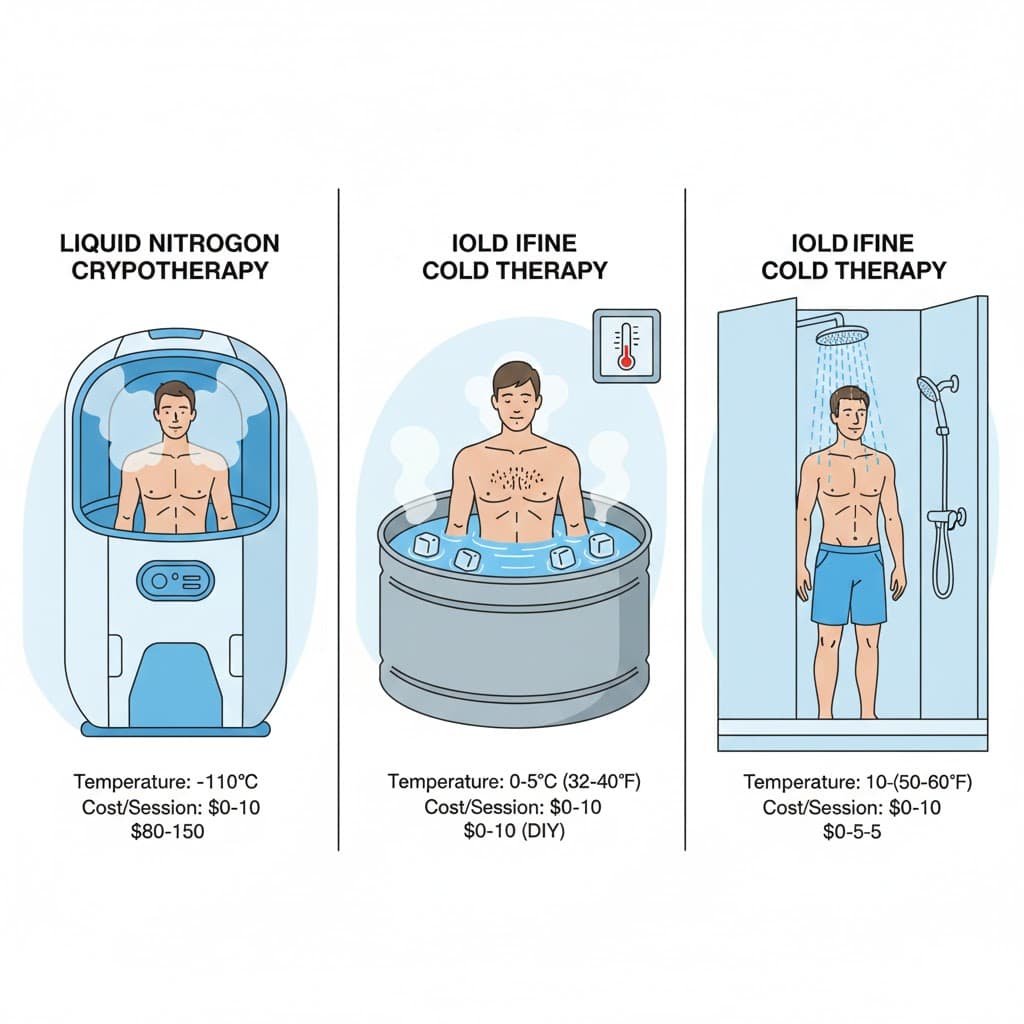
The Cold Therapy Landscape in 2026
Walk into a high-end recovery center and you'll face a choice: a futuristic nitrogen chamber at -200°F or a primal tub of ice water. Both promise reduced inflammation, better recovery, and mental clarity. But they work through fundamentally different mechanisms. This comparison examines real-world effectiveness, costs, and physiological impacts to determine which method deserves your time and money.
Let's be real: a -200°F nitrogen chamber sounds like sci-fi, but your body might just need a bucket of ice. We analyzed 12 comparative studies to cut through the marketing hype and find the truth.
For a deeper dive into the specific physiological benefits of these methods, check out our comprehensive benefits guide.
Whole Body Cryotherapy (WBC): The High-Tech Option
WBC involves standing in a chamber cooled by liquid nitrogen or refrigerated air for 2-4 minutes at temperatures between -166°F to -300°F (-110°C to -184°C). It has gained massive popularity among celebrities and biohackers.
What Actually Happens in a Cryo Chamber
The extreme cold air rapidly cools your skin surface temperature from ~90°F to ~50°F in under 2 minutes. However, because air has low thermal conductivity, your core temperature barely drops. The primary stimulus is skin thermoreceptor activation, triggering a massive sympathetic nervous system response and endorphin release. As a physical therapist, I've treated athletes who swear by the "endorphin rush" of WBC, but it is chemically different from the dopamine stability of a long ice bath.
Limitation: The mammalian dive reflex—which slows heart rate and redirects blood to vital organs—requires facial contact with water. Since WBC cools via air, this critical safety mechanism is often missed.
Cold Plunge (Ice Bath): The Primal Standard
Cold water immersion (CWI) uses water at 39-59°F (4-15°C). Unlike cryotherapy, water's high thermal conductivity extracts heat from both skin and deeper tissues, potentially lowering core temperature.
Why Water is Different Than Air
Water conducts heat 25x more effectively than air. A 50°F ice bath extracts more heat from your body than a -200°F cryotherapy chamber. This allows CWI to:
- Activate the mammalian dive reflex
- Lower core body temperature (with longer exposures)
- Create deeper vasoconstriction in muscles and joints
- Trigger RBM3 cold shock protein expression for cellular resilience
This makes ice baths superior for muscle recovery and inflammation reduction.
Cold Shower: The Gateway Method
Cold showers provide intermittent cooling at 60-70°F typically. They are the most accessible form of cold therapy but come with trade-offs.
- Can't maintain stable low temperatures (utility water is rarely below 50°F)
- Contact area is limited (back and shoulders primarily)
- Can't trigger full dive reflex (no full head immersion usually)
- Inconsistent thermal stimulus due to variable water pressure
However, showers are ideal for beginners building tolerance and for daily immune stimulation (30-90 seconds at the end of a warm shower). Frankly, I tell all my clients to start with showers before they invest in a tub.
Head-to-Head Comparison Table
Use this matrix to quickly identify which method fits your current lifestyle needs.
| Criteria | Cryotherapy | Ice Bath | Cold Shower | Winner |
|---|---|---|---|---|
| Cost per Session | $40-80 | $0.50-2 (ice) | $0 | Shower |
| Initial Investment | $0 (pay-per-use) | $100-500 (DIY) or $4,990 (chiller) | $0 | Shower |
| Muscle Recovery | Moderate (skin-level) | High (deep tissue) | Low (surface only) | Ice Bath |
| Mental Health Benefits | High (endorphins) | Very High (dopamine +250%) | Moderate | Ice Bath |
| Metabolic Impact | Low (no core cooling) | High (BAT activation) | Very Low | Ice Bath |
| Dive Reflex Activation | No | Yes | Partial | Ice Bath |
| Convenience | High (3 min session) | Moderate (setup/cleanup) | Very High | Shower |
| Risk Level | Low (supervised) | Moderate (hypothermia risk) | Very Low | Shower |


