The Evolutionary Link: Cold Stress & Survival
For 99% of human history, we lacked climate control. Our ancestors endured seasonal cold, and our biology developed sophisticated mechanisms not just to survive, but to thrive in thermal stress. Gerontologists now believe reactivating these "ancient survival pathways" is crucial for extending healthspan—the years we live in optimal health.
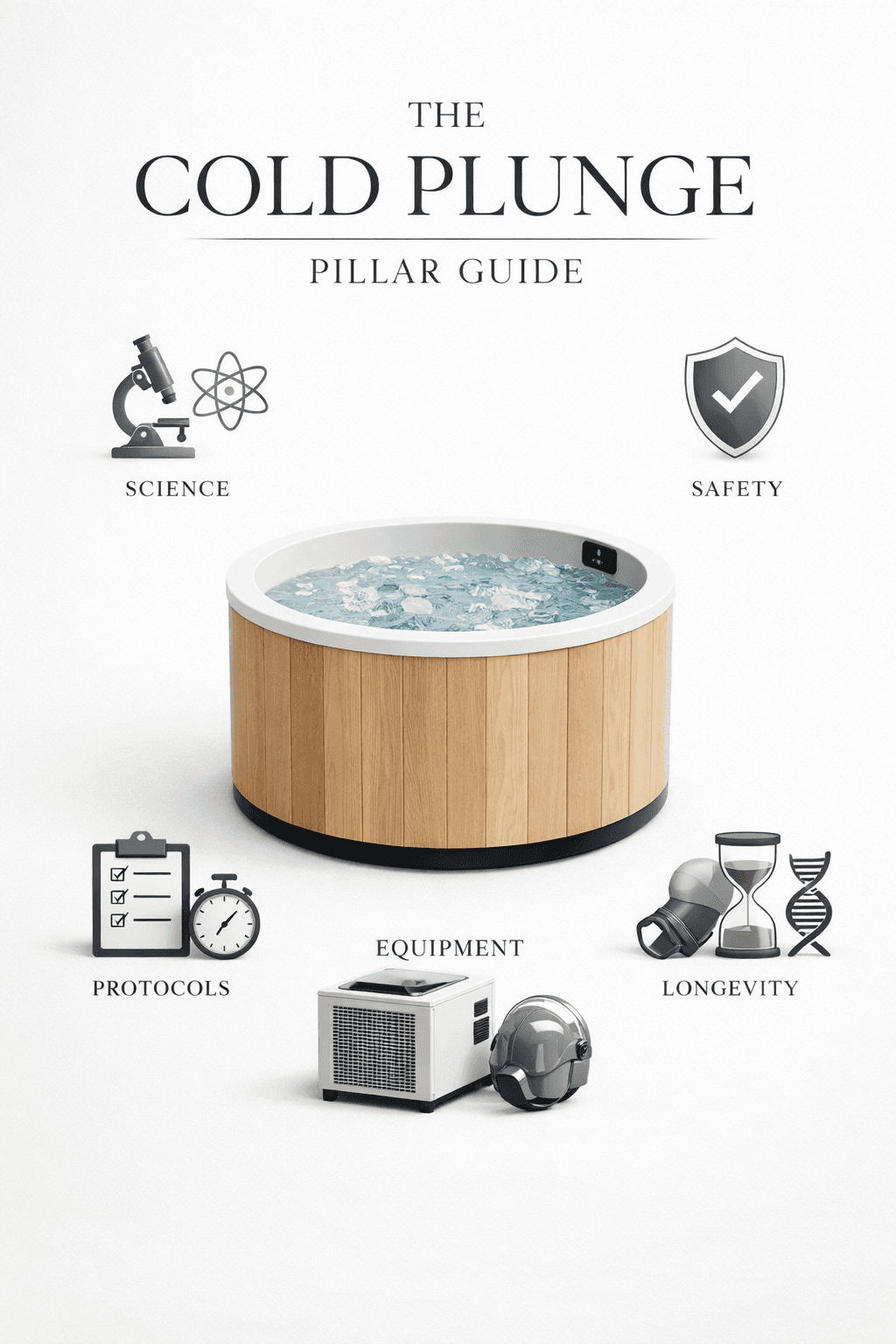
This pillar page organizes our entire knowledge base into one actionable resource. Whether you are a complete beginner or a seasoned biohacker, this guide connects the dots between the science of cold shock response and practical application.
The Science of Cold Shock Response & Adaptation
Understanding the cold shock response is the foundation of safe practice. This isn't just about toughness; it's about controlling a powerful physiological reaction.
The First 90 Seconds: Cold Shock Response
The first 30-90 seconds present the highest danger. The cold shock response is an involuntary reflex that occurs when cold receptors in your skin detect rapid temperature drop. It triggers an immediate gasp and rapid hyperventilation. If uncontrolled, this can lead to water inhalation and drowning—yes, even in shallow tubs.
Neurochemistry: Dopamine and Norepinephrine
Once you get past the gasp, the body unleashes a flood of neurochemicals. Research shows a 250% increase in dopamine that can last for hours, and a 200-300% spike in norepinephrine that enhances focus and arousal. This is why cold plunging is so effective for mental clarity and mood stabilization.
The Hormetic Stressor: Adaptation or Trauma?
Is this acute stress good or bad for you? The answer depends on dosage. In the context of hormesis, "what doesn't kill you makes you stronger." Short, controlled exposures act as a hormetic stressor that trains your nervous system to handle bigger stressors (life, work, public speaking) without overreacting.
Benefits Overview: Physical, Mental, Metabolic
Cold water immersion affects every body system. We break down the benefits into three key pillars: Physical Recovery, Mental Health, and Metabolic Optimization.
Physical Recovery: Muscle Soreness & Inflammation
The most cited reason for ice baths is post-workout recovery. Professional athletes have used CWI for decades, but science now quantifies exactly how effective it is. Research indicates a 20-30% reduction in Delayed Onset Muscle Soreness (DOMS) when performed at 50-59°F for 10-15 minutes post-exercise. The mechanism? Vasoconstriction flushes metabolic waste.
Mental Health: Neurochemistry & Stress Resilience
The psychological benefits are profound. Unlike other stressors that deplete neurotransmitters (like chronic work or caffeine), cold exposure replenishes them.
- Sustained Dopamine: 250% increase lasting 3-6 hours.
- Elevated Norepinephrine: 200-300% increase for focus.
- Stress Resilience: Reduced amygdala reactivity over 4-8 weeks.
Metabolic Health: Brown Fat Activation
Brown Adipose Tissue (BAT) is a metabolically active fat that burns calories to generate heat. Consistent cold exposure recruits BAT, increasing resting metabolic rate by up to 15% and improving insulin sensitivity.
Safety: Non-Negotiable Protocols
Cold water is powerful medicine, but it commands respect. Ignoring safety rules can lead to medical emergencies. Before your first dip, review our full safety guide.
Absolute Contraindications
Specific conditions make cold exposure dangerous:
- Uncontrolled Hypertension: Blood pressure spike >180/100 mmHg.
- Heart Arrhythmias: Irregular heartbeat triggered by shock.
- Pregnancy: Fetal stress response.
Equipment: Choosing Your Setup
Your choice of tub determines the quality of your practice. Don't overspend on features you don't need, but don't skimp on insulation or filtration if you plan to use it daily.
Explore our detailed buying guide comparing DIY setups, portable tubs, and premium chillers.
Protocols by Goal: Recovery, Focus, Longevity
One size does not fit all. Match your temperature and duration to your primary objective: athletic recovery, mental focus, or metabolic health.
| Goal | Temperature | Duration | Frequency | Primary Mechanism |
|---|---|---|---|---|
| Athletic Recovery | 50-59°F | 10-15 min | 3-4x/week | Vasoconstriction/Flush |
| Mental Focus | 39-50°F | 2-5 min | Daily | Dopamine/Norepinephrine |
| Longevity | 45-55°F | 15-30 min | 3-4x/week | FOXO3/Autophagy |
Note: Ensure you are medically cleared for intense cold exposure before attempting Longevity protocols.
Advanced Applications: Biohacking & Contrast
Once you've mastered basics, combine cold with other modalities (fasting, exercise, heat) for exponential benefits.
For advanced metabolic engineering, explore our Biohacking Guide.
Frequently Asked Questions
How soon will I see benefits?
What's the best time of day?
References: 1. Tipton MJ, et al. The initial responses to cold-water immersion in humans. J Physiol. 2017;595(3): 1003-1009. 2. Leppäluoto J, et al. Endocrine effects of cold exposure. Acta Physiol Scand. 1986;128(3): 467-470.
Scientific References
Cold water immersion for health and wellbeing
Source: Icebaths.com
Key Findings:
- Cold plunge therapy reduces stress and improves mental wellbeing, as shown in a 2025 PLOS One meta-analysis.
- The practice is backed by strong scientific evidence for recovery, focus, and metabolic health.
Medical Disclaimer: These links are provided for informational purposes only. They summarize scientific literature and do not constitute medical advice or endorsement.
Affiliate Disclosure: We may earn a commission if you make a purchase through our links — at no extra cost to you. This helps keep our reviews independent and the site running. Thank you for your support!
Recommended Products

CanuckCold
Onyx Cold Plunge Tub

CanuckCold
Cedar Cold Plunge & Water Chiller

CanuckCold
Pro 1 HP Chiller & Heater
Want to understand how we evaluate products? Read our research methodology to learn about our evaluation criteria, data sources, and editorial standards.